





Genealogy FAQs
Here is a list of regularly asked questions by our visitors to help you prepare for your visit to Glamis Castle.
Your questions answered
A: The Factors’ Accounts do record servants’ wages, but they were primarily compiled to keep track of finances, so most of the 19th and 20th century accounts deal with servants as a group, e.g. ‘servants’ wages’ or ‘gardeners’ wages’. However, the Factors’ Accounts often record employees as tenants in Glamis. Other surviving records worth checking are:
- Elizabeth, Countess of Strathmore, wife of the 4th Earl, kept a Cash Book, 1708-1724, in which she named servants and local tradesmen and their wages (Volume 238).
- Volume 344: Servants’ Wages Receipt Book, 1851 – 1861 (includes signatures).
- Volume 247: Wage book for the House Steward’s Department, 1888 – 1903 (which includes occupations and whether the servants boarded at Glamis, as well as signatures).
- Two printed pamphlets commemorating the coming of age of two of the Masters of Glamis, dated 1876 and 1905 respectively, list employees attending dinner. The earlier pamphlet lists only male employees, apart from the Chef de Cuisine, who was Mrs. Rutherford (Box 268).
- There are a few late 19th and early 20th century staff group photographs; these generally do not include individual names, although some do.
- Occasionally servants are named in accounts or correspondence from the 17th century onwards (e.g. Alexander Adam, butler, 1742; 44/4/87) or in Discharges of annualrents (e.g. Margaret Shaw, Housekeeper, 1745; 45/4/3/40).
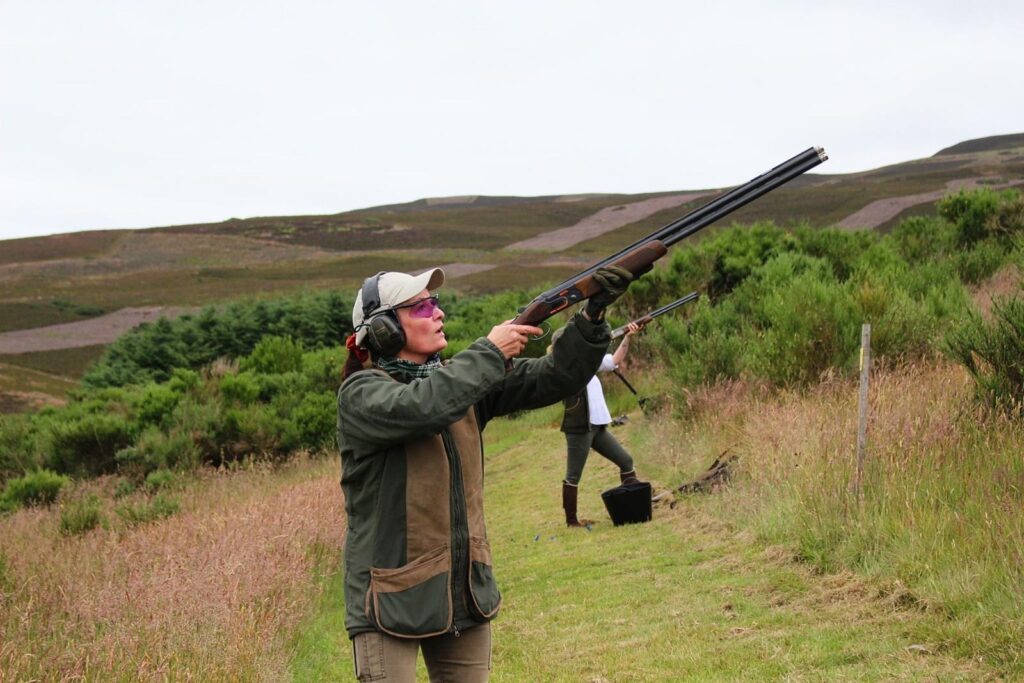
A: As for servants, the Factors’ Account books rarely mention gamekeepers individually by name. Similarly, the game books list all visiting hunting parties and include some photographs and drawings, but the gamekeepers are not individually named. There are some photographs of gamekeepers and other estate workers, including names, c.1910-1920; e.g. PH14/39). Game hunted on the estate would have included grouse, partridges, pheasants, woodcock, snipe, wild fowl, wood pigeon, hares, rabbits and deer. A surviving menu book for 1866 (Volume 246) shows that, unsurprisingly, game was a key part of the diet of both the Strathmore family and their servants.
A: Tenants are named in Estate Rentals, and generally the date of commencement and expiry of the lease is given. Rentals date from the late 17th century onwards, although there are some gaps (c.1730 – 1760 & 1820 – 1860). Tenants can also be named in other records, e.g. accounts and writs. Account Books of the Lordship of Glamis from the late 17th century name tenants and workers (Box 190). There are also Factors’ Account Books from 1754 – 1784 and 1864 onwards, which generally include details of tenants in estate rentals.
A: The Factors’ Account Books (from 1754 – 1784 and 1864 onwards) record payment of wages for building work carried out at the Castle and on the Estate. Major improvements were undertaken in the late 18th century and there are five volumes of Accounts of work done on the estate, with details of workmen, 1771-1776 (Volumes 17-21). Contracts and agreements with masons and other tradesmen appear from the early 17th century onwards and the Account Books of the Lordship of Glamis from the late 17th century are useful sources for naming workers, such as masons and labourers (Box 190).
A: Yes. The Factors’ Account Books are a rich source of information for local trades people, as individual names, work undertaken at the Castle or on the Estate, supplies purchased and costs are meticulously recorded. There are also many bundles of personal family accounts relating to purchases, not just from local trades people, but from trades people in Dundee, Edinburgh, the North of England, London, etc. These accounts generally include signatures or ‘marks’, so the literacy of ancestors can also be determined.
· A:
· The Visitors’ Book, 1905 – 1938 records the signatures and battalions of many, but not all of the soldiers who stayed at Glamis.
· Lady Elizabeth Bowes-Lyon (Queen Elizabeth The Queen Mother) kept a WWI Autograph Book in which many of the soldiers signed their names or included poems and sketches.
· There are some group photographs of soldiers, though they are not generally named.
Patients were transferred to Glamis from Dundee Royal Infirmary, so it would be worth checking the DRI records, which are held at the University of Dundee Archives to see if there are any admission/transfer/discharge records for your ancestor, see http://www.dundee.ac.uk/archives/ and click on ‘Unlocking the Medicine Chest’ to get the online catalogue. You can send an enquiry with your ancestor’s details to [email protected]
The Queen Mother’s Official Biography ‘Queen Elizabeth The Queen Mother’ by William Shawcross (published by Macmillan, 2009) contains an interesting chapter on ‘Tending the Wounded’ at Glamis.
A: Yes. It is always worth checking as the archive includes records from a wide area – from home and abroad.
- Some late 17th/early 18th century estate rentals for the Castle Lyon Estate
- Records of the Bowes’ English Estates in County Durham (Streatlam, Wemmergill, Gibside); St Paul’s Walden Bury, Hertfordshire; London.
- Accounts of trades people from Scotland, England and abroad.
A: The Bowes Lyon family has many branches, but researchers should be aware that not all are recorded in the archives at Glamis. Whilst there are holdings of family correspondence and accounts, coverage is by no means comprehensive. The following books can be purchased online, but please note these are secondary sources, so may contain errors:
• The Lyons of Glamis 1350 – 1750 by Michael John Lyon (New Generation Publishing, 2015)
• The Lyons of Glamis 1750 – 2000 by Michael John Lyon (New Generation Publishing, 2018)
• A Most Remarkable Family: A history of the Lyon family from 1066 to 2014 by Michael Hewitt (published by Michael Hewitt, Lyon Books UK, 2014)
• The Lyons of Cossins and Wester Ogil by Andrew Ross (George Waterston & Sons, Edinburgh, 1901)
• It may be possible to get further information about a specific Lyon ancestor in the archives, but exact information (name and date) is required before a search can be undertaken and findings cannot be guaranteed.
• There are Bowes family (England) letter books from 1551 – 1807.
• For online images of the pre-1855 Old Parish registers of births, marriages and deaths (OPRs), census records from 1841 to 1911, and birth, marriage and death registers from 1855 onwards (when civil registration became compulsory in Scotland), go to http://scotlandspeople.gov.uk/
• For the genealogy of the peerage of the UK online, see: http://thepeerage.com/
A: It is possible to visit the Archives at Glamis to undertake research two days a week (usually Tuesdays and Wednesdays, but arrangements must be made well in advance). Depending on the nature of the research, charges may apply and visitors should be aware that the archives are located at the top of the tower, involving a 92-step climb. Readers may take photographs of archive items using their own cameras, subject to the approval of the Archivist, the charge of £10 per day, and the completion of the Copy Declaration form. Alternatively, it is possible to arrange for certain records, subject to the approval of the Archivist, to be transferred to the Dundee University Archives for viewing in the search room there, located in the basement of the Tower Building, Nethergate (currently £100 inclusive for administration, delivery and collection of material). The NRAS hand lists of the Strathmore Estate Papers and the Glamis Archives database can also be consulted there, as well as at the Castle Archives.
A: Yes. An initial search of up to half an hour is free of charge. The archivist can conduct further research at a charge of £40 per hour (payable in advance of any research and inclusive of any relevant images).
The archivist can be contacted at [email protected], but please be aware that she works part-time and that positive findings cannot be guaranteed.
