Skip to content
Close

Kids Eat Free

Dine with us in our Castle Kitchen Restaurant where kids can eat free when adults choose to enjoy a main meal.

Date: 27th July - 2nd August
Time: 12 noon - 4pm

Sustaining Glamis

Glamis Castle is more than a family home and historic residence. The Castle and village are the focus of a traditional rural estate which continues to encourage the development of a thriving rural community today.

Historically, the Castle has been largely self-sufficient, with fruit and vegetables grown in the kitchen garden, as well as game, livestock, farming, and forestry on the estate. Staff and tradespeople have played a key role in sustaining the residents of Glamis from servants, cooks, gardeners, game keepers and foresters, to local farmers and merchants.

This exhibition focuses on the many interwoven strands involved in sustaining Glamis Castle and its estate from the past to the present, with emphasis not just on survival, but also quality of life, and conservation.

Sustainabilty

The Castle Kitchens

The Victorian Kitchens, which now serve as our restaurant, occupy part of a wing built in 1773 – 1776.

They replaced the 16th century kitchens located in the south-east corner of the castle.  The main kitchens feature an interesting range of Georgian, Victorian and Edwardian cooking equipment from the 18th, 19th and 20th centuries which ensured the…Read More

They replaced the 16th century kitchens located in the south-east corner of the castle.  The main kitchens feature an interesting range of Georgian, Victorian and Edwardian cooking equipment from the 18th, 19th and 20th centuries which ensured the kitchen ran efficiently.

Displayed on the kitchen range, which dates from the mid-19th century, is the magnificent ‘batterie de cuisine’. This collection of cooking utensils, all made of copper and many bearing the ‘Strathmore and Kinghorne’ monogram, includes long handled skimmers, rolled edged and dove- tailed bottom pans, chafing dishes, and frying pans.

Only the rich and larger houses owned copper moulds. These were often made in castle shapes or to resemble fruit; the pineapple, a symbol of welcome, being the most popular. In the 18th century game pies were most decorative, often made in hinged moulds to produce the popular ‘raised’ pie.

The Dining Room

The Dining Room is not just a sumptuous place to eat, it is also steeped in history.

The entire wing in which the Dining Room is situated was demolished in 1775 and rebuilt in 1798- 1801. The room was re- designed in 1851-1852 by the Hon Thomas Liddell, great grandson of the 8th Earl of Strathmore, and installed by a group of craftsmen…Read More

The entire wing in which the Dining Room is situated was demolished in 1775 and rebuilt in 1798- 1801. The room was re- designed in 1851-1852 by the Hon Thomas Liddell, great grandson of the 8th Earl of Strathmore, and installed by a group of craftsmen from northern England. The superb plaster ceiling is decorated with thistles of Scotland, roses of England and lions of the Lyon family. The history of the family is shown by painted heraldic shields attached to oak-panelling, and the stained-glass windows show the evolution of the Strathmore coat of arms.

The mahogany dining table when fully extended seats 40 people and is laid with items of Bowes Lyon silverware, porcelain and glass used by the family throughout the years. Glamis Castle was used as a class ‘A’ auxiliary hospital for convalescent soldiers during the First World War. The dining table was removed and replaced by beds along the panelled walls. The Castle provided a temporary haven for the soldiers before they returned to the front line.

Servants and Employees

Servants have played an integral part in sustaining Glamis Castle over the centuries.

Housekeepers, butlers, footmen, ladies’ maids, governesses, cooks, kitchen, scullery, dairy and nurse maids, caretakers, and chauffeurs have each contributed to the care of the Castle and its occupants. Only two wage books from the House Steward’s…Read More

Housekeepers, butlers, footmen, ladies’ maids, governesses, cooks, kitchen, scullery, dairy and nurse maids, caretakers, and chauffeurs have each contributed to the care of the Castle and its occupants. Only two wage books from the House Steward’s department survive in the Castle Archives, dated 1851-1861 and 1888-1903 respectively. The latter also records when servants accompanied members of the Strathmore family on their travels.

The Wine Cellar

The wine cellar at Glamis, ‘the catacombs’, lies at the heart of the Castle and was fitted out for John, 9th Earl of Strathmore in 1765.

Wine cellars were required by large households to hold considerable quantities of wine over the years, so that they could mature and become pleasantly drinkable. Some had still not reached this stage during the lifetime of the purchaser, like the 1860…Read More

Wine cellars were required by large households to hold considerable quantities of wine over the years, so that they could mature and become pleasantly drinkable. Some had still not reached this stage during the lifetime of the purchaser, like the 1860 Claret purchased by Claude Bowes Lyon, later the 13th Earl.
The prestigious Christie’s 1971 sale of ‘The Finest and Rarest Wines from Private Cellars’ included many wines from the Glamis Cellar, such as magnums of Lafite from the 1870 vintage and a fascinating range of champagnes of which the youngest, the Krug 1928, was regarded by Christie’s as one of the most perfect champagnes ever made. Many of the bottles sold were still in their original position in the bins, as listed in the immaculately kept cellar books of this period. Beside these classics, the cellar contained everyday favourites of the family as can be seen from the bin labels.

Balls and House Parties

Balls were grand affairs, which required meticulous preparation, as is evident from the ball to mark the ‘coming of age’ of Patrick, Lord Glamis (brother of Queen Elizabeth The Queen Mother, and later the 15th Earl).

The celebrations took place over several days at Glamis in September 1905 and included a dinner for the Castle and Estate employees. Supper for the ball took place in a large marquee adjoining the castle, which was lined with pink and green muslin and…Read More

The celebrations took place over several days at Glamis in September 1905 and included a dinner for the Castle and Estate employees. Supper for the ball took place in a large marquee adjoining the castle, which was lined with pink and green muslin and decorated with strings of evergreen starred with white roses. The supper was set out on half a dozen round tables, each centred with a silver candelabrum, with two serving tables down the centre. The viands were all cooked by Head Chef Gunter’s staff of four cooks in a kitchen specially set up for the occasion.

Shooting Parties

Shooting parties at Glamis were lavish affairs. Game hunted on the estate included grouse, partridges, pheasants, woodcock, snipe, wild fowl, wood pigeon, hares, rabbits, and deer.

A surviving menu book for 1866 shows that meat/game was a key part of the diet of both the Strathmore family ‘ upstairs’ and their servants ‘downstairs’.

Doocot & Circular Towers

The two circular towers were rebuilt in 1814 on opposite ends of the front lawns on or close to the original towers which were once the corners of the walled gardens.

The 3rd Earl stated in the 1680s that the original towers were fitted out, one ‘for a dairy house, the other for a still house’. The Glamis Castle Doocot (known as the ‘Doos Doocot’ by locals) is situated on the left of the main driveway. It…Read More

The 3rd Earl stated in the 1680s that the original towers were fitted out, one ‘for a dairy house, the other for a still house’. The Glamis Castle Doocot (known as the ‘Doos Doocot’ by locals) is situated on the left of the main driveway. It contains around 800 nesting boxes for pigeons or doves and was used to supply fresh meat and eggs to the Castle. Doocots were considered a great status symbol at the time of its building in the 17th century, but the buildings went out of fashion in the early 19th century. The Glamis Doocot survived, perhaps due to the superstition that its demolition would be unlucky for the family.

Icehouses

The old icehouse was constructed at the Glamis Burn in the late 17th century by Patrick, the 3rd Earl.

This ovate chamber is situated about 600 yards from the castle and measures 18 x 23 feet. A new icehouse was built near to Bridgend in the mid-19th century, whilst the old icehouse was rebuilt by the 13th Earl in 1866. Prior to electric refrigerators, ice…Read More

This ovate chamber is situated about 600 yards from the castle and measures 18 x 23 feet. A new icehouse was built near to Bridgend in the mid-19th century, whilst the old icehouse was rebuilt by the 13th Earl in 1866. Prior to electric refrigerators, ice houses were used to store ice throughout the year – a must for an estate the size of Glamis. The ice was used for preserving and storing food, cooling drinks, and making ice cream and sorbet desserts.

The Gardens

Walks lead you eastwards from the Castle across the Glamis Burn to the Pinetum, planted by the 13th Earl, c.1870, with a variety of exotic trees, many of them conifers from north America.

Following a period of neglect, the 18th Earl restored and began to replant and redevelop this area. Along the northern edge of the Pinetum lies the Water of Dean, a small burn which drains the Loch of Forfar, and which runs onwards to join the River Tay.…Read More

Following a period of neglect, the 18th Earl restored and began to replant and redevelop this area. Along the northern edge of the Pinetum lies the Water of Dean, a small burn which drains the Loch of Forfar, and which runs onwards to join the River Tay. This was canalised in the 18th century to improve the drainage from the surrounding farmland. The original bridge crossing the burn was built in 1890. It was re-opened in 1996 by Queen Elizabeth The Queen Mother and named the Earl Michael Bridge in tribute to the 18th Earl who restored it.

The four-acre brick-walled kitchen garden is approached by a grass ramp leading through what were once terraced flower gardens. The Walled Garden was built for the 13th Earl between 1866 and 1868 to designs by Archibald Fowler of Castle Kennedy, at a cost of £7,500. It continues to be the centre of production for fruit, vegetables and flowers for the Earl of Strathmore, his family, and guests throughout the year both at Glamis and family homes elsewhere. Queen Elizabeth II enjoyed grapes sent from Glamis to Balmoral each year. It also provides young plants for cultivation in other parts of the decorative garden, as well as a fine array of tropical pot plants for indoor ornamentation and enjoyment. Glamis is famous for the quality of its glasshouse fruit – peaches, nectarines, melons, figs, and prize- winning grapes

Hunting & Shooting

On a rural estate, all the various activities influence and affect each other and the best example of this is the wildlife and shooting.

The income received from simulated shoots benefits all other forms of wildlife by enabling the retention of rough areas which are not planted with commercial trees and areas of crop planted especially for birds, rather than being sown with a crop of…Read More

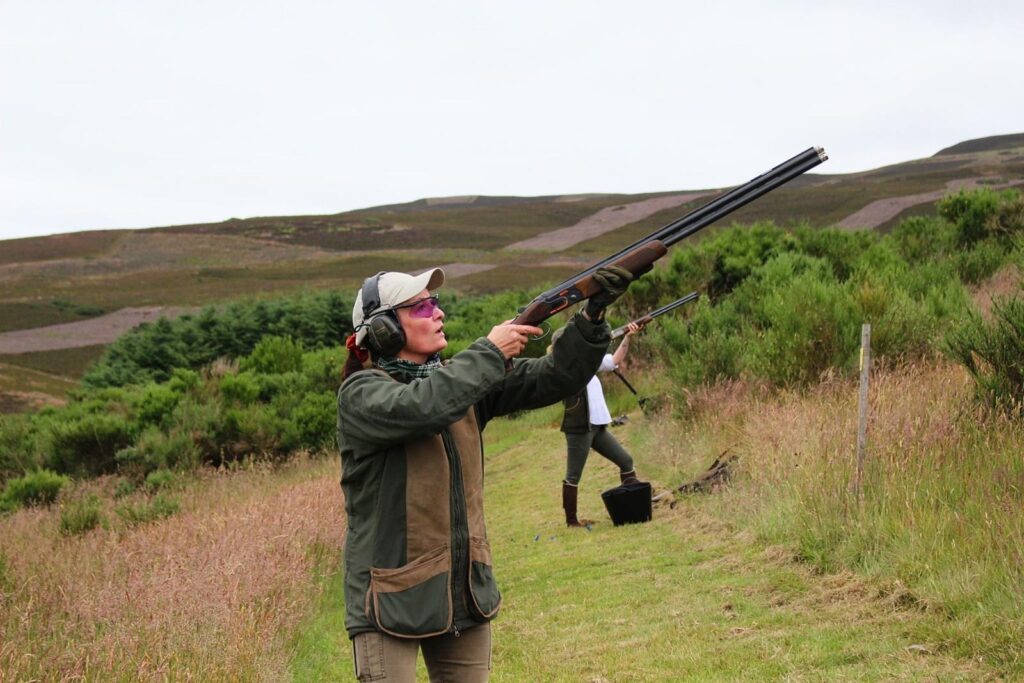
The income received from simulated shoots benefits all other forms of wildlife by enabling the retention of rough areas which are not planted with commercial trees and areas of crop planted especially for birds, rather than being sown with a crop of barley. Neal Gregory, the Sporting and Wildlife Manager works hard to protect and enhance the topography of the estate for wildlife, guests, and the local community.
The colourful Game Books from 1878 onwards were primarily kept as a record of the numbers and variety of game shot on the Glamis estate, but uniquely they also contain historical depictions, as well as intricate wildlife illustrations, and photographs. Game hunted on the estate at the time included grouse, partridges, pheasants, woodcock, snipe, wild fowl, wood pigeon, hares, rabbits, and deer. Times have changed and in 2024, although the quarry list has not altered, a move away from driven game has, and the emphasis is on more sustainable walked up game shooting and simulated shooting using clay targets.

Fishing

The Dean Water, which rises in the Loch of Forfar, is the principal stream in the parish of Glamis, and is joined by the Ballindarg Burn from Kirriemuir, the Kerbet Water from Kinnettles, and the Glamis Burn from the Sidlaws.

Greyling and fine quality trout can be found in the Dean, but not salmon, although they cross the mouth of it in passing up the Isla River.

Forestry

The woods on the Estate have remained in continuous forestry for many centuries, and a plan of 1788 shows almost identical boundaries to the present day.

There is thus a wide range of tree species with some large and spectacular ancient trees. When areas of forestry are being replanted, open areas can be left, and a proportion of hardwood trees planted to diversify the forest for the benefit of wildlife.…Read More

There is thus a wide range of tree species with some large and spectacular ancient trees. When areas of forestry are being replanted, open areas can be left, and a proportion of hardwood trees planted to diversify the forest for the benefit of wildlife. As well as the formal gardens and grounds of the Castle, public access is encouraged on other parts of the Estate through woodland areas, where locals and visitors alike can exercise dogs and enjoy the wildlife.

The Sawmill

The Sawmill on the Estate has been on the same site since 1908-1910.

The mill at that time was run by a water wheel with water from the Glamis Burn. This water wheel is at least the second one on this site as the building had been used from around 1805 as part of the jute industry. Today the trees are brought to the mill…Read More

The mill at that time was run by a water wheel with water from the Glamis Burn. This water wheel is at least the second one on this site as the building had been used from around 1805 as part of the jute industry. Today the trees are brought to the mill but there are a few sites on the estate (Huntershill, Cramshill and Ewnie Den) where formerly the mills run by steam engines were taken to the trees. The Station Wood has a concrete base in the ground where the mill worked; wood was cut then loaded onto the train at Glamis Station, 100 metres away.
The current mill was built in 1975 and in 2010 a water turbine was installed next to the 1908 water wheel. The turbine produces 70KW at full power and the first refusal of electric is the estate office, then the sawmill, with anything spare going into the grid. Therefore, the mill has gone full circle and returned to being run from the Glamis Burn again.
 

Farming

The Estate has developed over many centuries and today comprises a wide variety of properties, business and leisure activities.

The policy has always been to maintain and restore the traditional parts of the Estate, whilst at the same time supporting and encouraging the rural community to ensure as many people as possible are able to have jobs and live in the countryside.In 2024…Read More

The policy has always been to maintain and restore the traditional parts of the Estate, whilst at the same time supporting and encouraging the rural community to ensure as many people as possible are able to have jobs and live in the countryside.
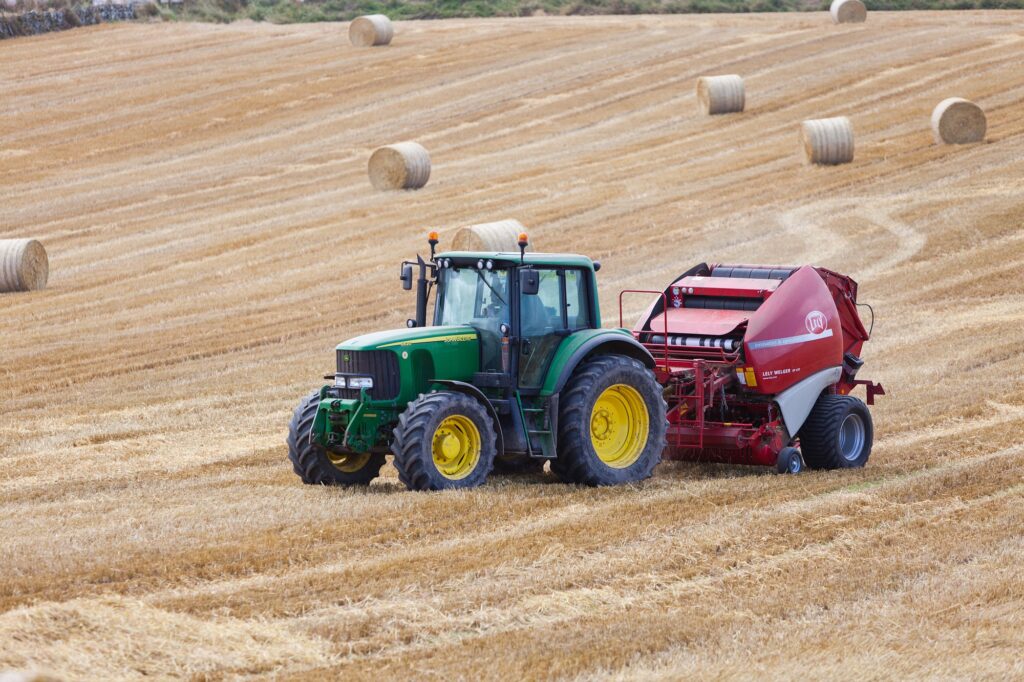
In 2024 the Estate comprises of 14,500 acres. Strathmore Farming Company farms 5,700 acres, about half arable crop land and half grass and heather hill. Most of the tenant farmers have a mixed farming system including crops and livestock. A wide range of combinable crops are grown on the arable land alongside seed potatoes and a herd of breeding pigs. Beef cows and their offspring are raised on the grass and rough hill land. Although modern tractors and machinery are used to produce the food, great care is taken to enhance and conserve the wildlife habitats in hedgerows and field margins. An increasing proportion of crops are being grown using either less tillage or no tillage techniques to reduce the impact on soil life and create a more natural environment with minimal chemical use.

By the mid-1800s most farms on the estate had a bothy where generally unmarried farm workers lived in basic conditions under one roof. A married man who worked as a ploughman or cattleman would be provided with a cottage near the farm. Working days were long, and the men would rise around 5.30am to clean out the stables and feed the horses before they could start ploughing around 7am. Turnips would be lifted to feed the cattle and oats would be threshed at the appropriate time to sell. After the grain harvest, potatoes were dug out and children were encouraged to pick them, which led to the introduction of the ‘Tattie Holidays’ in October so they wouldn’t miss school. Modern farming employs far fewer people due to mechanisation and much of the work isn’t so physical as in the past. Farm life encompasses many other jobs such as clearing ditches, mending fences, cutting hedgerows, maintaining farm buildings and machinery, and working in all weathers.

Strathmore Estate is committed to ensuring that it operates in a sustainable manner, reducing its impact on the environment where possible and ensuring that the estate is maintained for all generations to enjoy.

A key focus of the Estate is the conservation and regeneration of the natural environment. It is dedicated to the Green Tourism Business Scheme and environmental issues and impacts are regularly considered. Energy usage is measured and controlled, for example by thermostatically controlled heating, biomass heating systems and improvements to building insulation, whilst the generation of increased amounts of green hydro power presently supply the Estates Office and Sawmill.

The Estate invests heavily in habitat management, which includes the control of Roe deer and pest species to the benefit of all other wildlife at Glamis. All shot game and venison is used locally, mostly in the castle restaurant, thus reducing carbon emissions.

Strathmore Farming Company has for many years supported biodiversity by planting and managing hedges and grass strips in a nature friendly way. In recent years it has expanded its efforts in a way that is kinder to nature by sowing using no till techniques, mob cattle grazing and reducing artificial inputs where it can.

The gardens at Glamis Castle are part organic, creating their own mulch, keeping the use of pesticides and herbicides to an absolute minimum. Local suppliers are used wherever possible to reduce the Estate’s carbon footprint.

Discover More